Best Filament for Bambu Lab Printers and the AMS (2026)
Bambu's own filament is the reference on this page, because the AMS reads it without help. Next to it, for each job, sits the third-party roll we print with ourselves, and what it costs you in setup: everyday PLA, matte PLA, PETG, ASA, TPU and carbon fiber.
Short version
If you print from an AMS, start with Bambu PLA Basic: its RFID tag carries the print settings, the AMS reads them and sets up the slot by itself, and Bambu Studio has a preset for it on every Bambu printer. In the US store it costs $14.99 as a refill and $17.99 with a spool. For TPU and carbon fiber in the AMS, take Bambu's TPU for AMS and PLA-CF: Bambu rates both for the AMS.
Besides Bambu PLA Basic and PETG Basic, we print with the six third-party rolls on this page: eSUN PLA+, Overture PLA, Polymaker Panchroma Matte, Sunlu PETG, Polymaker ASA and Overture TPU 95A. With them you set each AMS slot by hand, and on the P2S, X2D, A2L, H2C and H3C Bambu Studio has no preset for them. Overture TPU 95A stays out of the AMS altogether.
- picks we print with ourselves
- 8 of 12
- spool diameter the AMS, AMS 2 Pro and AMS HT take, in mm
- 197–202
- spool width they take, in mm
- 50–68
PLA
Bambu PLA Basic is the reference for the whole page. eSUN PLA+ and Overture PLA are the third-party PLA we print with; with them you give up the automatic setup in the AMS and, on the newest printers, the brand preset. Which printers and feed paths suit each pick is in Table 1.

Bambu PLA BasicReference PLA
Bambu lists it for all AMS series, and its RFID tag carries the print settings: the AMS reads them and sets up the slot by itself, and the same read gives the AMS an estimate of what is left on the spool. Bambu Studio has a PLA Basic preset for every Bambu printer. We print with it ourselves, and it is very good in our use. $14.99 as a refill, which goes on a reusable spool, or $17.99 with a spool.
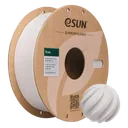
eSUN PLA+Everyday PLA
Our everyday PLA, and very good in our use. Bambu Studio has an eSUN PLA+ preset for the A1, A1 mini, P1P, P1S, X1 series, H2D, H2D Pro and H2S; on the P2S, X2D, A2L, H2C and H3C you start from Generic PLA. Against PLA Basic you give up the RFID setup: type and color go into its AMS slot by hand.
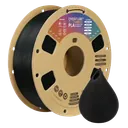
Overture PLAFast PLA
Overture now sells it as High Speed PLA, rated for up to 300 mm/s. Bambu Studio's preset still calls it Overture PLA and covers the same printers as the eSUN preset. Very good in our use; as with eSUN, you set its AMS slot by hand.
Links to Amazon are affiliate links. We may earn a commission at no extra cost to you. Bambu PLA Basic shown as a printed vase, as in Bambu's store. Image: Bambu Lab.
Matte PLA
Both rolls print with a matte surface. The difference is the setup and the spool: Bambu's comes ready for the AMS, Polymaker's on cardboard.

Bambu PLA MatteReference matte PLA
Bambu lists it for all AMS series, with the same RFID setup as PLA Basic, and Bambu Studio has a preset for every Bambu printer. It comes with a spool or as a refill for a reusable spool. $18.99 with a spool.
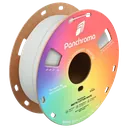
Polymaker Panchroma MatteMatte PLA
PolyTerra PLA under a new name: Polymaker says the material is the same. It comes on a cardboard spool; Polymaker says its spools now have hardened edges that roll well in the AMS, while Bambu still strongly advises an adapter ring for cardboard spools. The Bambu Studio preset is still called PolyTerra PLA, for the same printers as eSUN. Very good in our use.
Links to Amazon are affiliate links. We may earn a commission at no extra cost to you. Bambu PLA Matte shown as a printed vase, as in Bambu's store. Image: Bambu Lab.
PETG
PETG is for parts that face heat or knocks: Bambu rates it above PLA on both. Bambu recommends an enclosed printer for it, since cold room air weakens the layer bonding, and drying the roll before you print.
Bambu PETG BasicReference PETG
Bambu lists it for all AMS series, with the RFID setup, and Bambu Studio has a preset for every Bambu printer. Bambu's page says to dry it before use. We print with it ourselves, and it is very good in our use. $16.99 with a spool.
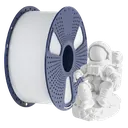
Sunlu PETGPETG
The third-party PETG we print with, and very good in our use. Its built-in preset covers only the A1, A1 mini, P1P, P1S and X1 series; the H2 series, P2S, X2D, A2L and H3C start from Generic PETG. You set its AMS slot by hand.
Links to Amazon are affiliate links. We may earn a commission at no extra cost to you. Bambu PETG Basic shown as a printed vase, as in Bambu's store. Image: Bambu Lab.
ASA
ASA is for parts that live outdoors or somewhere warm: Bambu counts it among the filaments for high-temperature use, while it does not recommend PLA from about 50°C. Bambu does not recommend ASA on open-frame printers, so both picks are for enclosed ones.
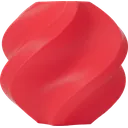
Bambu ASAReference ASA
Bambu's page lists it for the AMS, AMS 2 Pro and AMS HT, not the AMS lite, and requires an enclosed printer. It comes on a high-temperature reusable spool with the RFID setup, and Bambu Studio has a preset for every enclosed Bambu printer. $17.99 (typical price $29.99) with a spool.
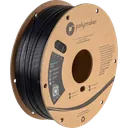
Polymaker ASAASA
The ASA we print with now and then, and very good when we do. Polymaker sold it as PolyLite ASA, and Bambu Studio's preset still uses that name, for the P1S, X1 series, H2D and H2D Pro; other enclosed printers start from Generic ASA. You set its AMS slot by hand.
Links to Amazon are affiliate links. We may earn a commission at no extra cost to you. Bambu ASA shown as a printed vase, as in Bambu's store. Image: Bambu Lab.
TPU
TPU is for parts that have to flex, and the two picks are not the same material. Bambu's material table lists 95A TPU as too soft for the AMS and AMS lite; Bambu's TPU for AMS is rated 68D, harder than 95A on Bambu's own hardness scale, and it is the one TPU Bambu rates for every AMS.

Bambu TPU for AMSTPU for the AMS
Bambu's TPU guide says it prints through the regular automatic feeding of all AMS series products, the AMS lite included, and it carries the RFID setup and a Bambu Studio preset for every Bambu printer. Dry it before use, and keep it off a 0.2 mm nozzle. $23.39 (typical price $38.99) with a spool.
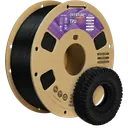
Overture TPU 95AFlexible TPU
Softer than TPU for AMS, for parts such as watch bands or tires that have to flex. Because 95A is too soft for the AMS, Bambu's TPU guide feeds it from a sealed dry box, or from an AMS HT used only as a sealed box. No Overture preset in Bambu Studio, so start from Generic TPU. Very good in our use. Setup per printer: Overture TPU on Bambu printers.
Links to Amazon are affiliate links. We may earn a commission at no extra cost to you. Bambu TPU for AMS shown as a printed vase, as in Bambu's store. Image: Bambu Lab.
Carbon fiber
There is no third-party carbon fiber pick here. Bambu's notes for the AMS advise against third-party fiber-reinforced filament in it, since it can wear the AMS tubes or break inside, and name Bambu's own PLA-CF and PETG-CF as optimized for the AMS.
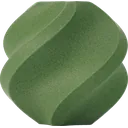
Bambu PLA-CFCarbon fiber
Bambu lists it for all AMS series, the AMS lite included, with the RFID setup and a preset for every Bambu printer. It needs a hardened steel nozzle: Bambu does not recommend stainless steel and rules out 0.2 mm. Bambu rates PLA-CF above plain PLA for strength, not for heat; for warm places, take ASA. $34.99 with a spool.
Bambu PLA-CF shown as a printed vase, as in Bambu's store. Image: Bambu Lab.
Which pick for which printer
Three things decide whether a filament suits your setup: the printer (open frame or enclosed), the feed path (AMS, AMS lite or a spool outside them) and whether Bambu Studio has a preset for it. Table 1 sets the twelve picks against Bambu's own rules.
| Pick | Material | Printer | AMS and AMS lite | RFID setup | Built-in Bambu Studio preset |
|---|---|---|---|---|---|
| Bambu PLA Basic | PLA | Open frame or enclosed | Yes, all AMS series | Yes | Every Bambu printer |
| eSUN PLA+ | PLA | Open frame or enclosed | Yes | No, by hand | A1, A1 mini, P1P, P1S, X1 series, H2D, H2D Pro, H2S |
| Overture PLA | PLA (sold as High Speed PLA) | Open frame or enclosed | Yes | No, by hand | Same printers as eSUN PLA+ |
| Bambu PLA Matte | Matte PLA | Open frame or enclosed | Yes, all AMS series | Yes | Every Bambu printer |
| Panchroma Matte | Matte PLA | Open frame or enclosed | Yes; adapter ring for the cardboard spool | No, by hand | Same printers as eSUN PLA+, as PolyTerra PLA |
| Bambu PETG Basic | PETG | Either; enclosed recommended | Yes, all AMS series | Yes | Every Bambu printer |
| Sunlu PETG | PETG | Either; enclosed recommended | Yes | No, by hand | A1, A1 mini, P1P, P1S, X1 series |
| Bambu ASA | ASA | Enclosed only | AMS, AMS 2 Pro, AMS HT; not the AMS lite | Yes | Every enclosed Bambu printer |
| Polymaker ASA | ASA | Enclosed only | AMS: yes. AMS lite: Bambu advises against ASA on the open-frame A1 series it serves | No, by hand | P1S, X1 series, H2D, H2D Pro, as PolyLite ASA |
| Bambu TPU for AMS | TPU, 68D | Open frame or enclosed | Yes, all AMS series | Yes | Every Bambu printer |
| Overture TPU 95A | TPU, 95A | Open frame or enclosed | No: dry box, or an AMS HT used as a sealed box | No, by hand | None; Generic TPU |
| Bambu PLA-CF | PLA with carbon fiber | Open frame or enclosed; hardened steel nozzle | Yes, all AMS series | Yes | Every Bambu printer |
- Printer: Bambu's material table. Open frame means the A series and the P1P; enclosed means the P1S, P2S, X1 series, X2D and H2 series.
- AMS and AMS lite: Bambu's material table and Notes for AMS, and for the Bambu picks their store pages. The material table names the AMS and AMS lite; we read "AMS" there as the whole AMS family, AMS 2 Pro and AMS HT included.
- RFID setup: Bambu's store pages: "All printing parameters are embedded in RFID, which can be read through our AMS."
- Preset: Bambu Studio's profile library, version 02.09.00.74, checked November 17, 2026. The P2S, H2C, X2D, A2L and H3C have no built-in preset for any of the third-party brands here; use the Generic profile for the material.
- Panchroma Matte comes on a cardboard spool: in the AMS, Bambu strongly advises an adapter ring. An AMS HT can hold TPU as a sealed box that feeds through its TPU outlet.
- Source: Bambu Lab wiki, material table, Notes for AMS and TPU Printing Guide; Bambu Lab US store, ASA and TPU for AMS, checked November 17, 2026
Bambu or third-party?
Any 1.75 mm PLA or PETG prints on a Bambu printer; Bambu's material table rates materials, not brands. What changes with the brand is the setup, and five checks show how much of it you are buying.
- The setup. Bambu's rolls carry RFID tags with their print settings, and the AMS reads them; the AMS 2 Pro and AMS HT also take the drying settings from the tag. A third-party roll you set up slot by slot. AMS auto-refill switches only to a spool with the same brand, type, color and nozzle temperature, and Bambu recommends Bambu filament as the backup for Bambu filament.
- The remaining filament. The AMS estimates what is left on a spool from how far its RFID tag turns, so the estimate needs a spool with Bambu's tag.
- The spool. The AMS, AMS 2 Pro and AMS HT take spools 50 to 68 mm wide and 197 to 202 mm across; the AMS lite takes spools 40 to 68 mm wide on a 53 to 58 mm center hole. Bambu recommends plastic spools in the AMS and strongly advises an adapter ring for cardboard ones. A Bambu refill needs a reusable spool.
- The preset. On an A1, P1S or X1, five of the six third-party picks have a brand preset; on the P2S, H2C, X2D, A2L and H3C none of them has one, while Bambu's own rolls have a preset on every Bambu printer. How the brand presets compare with the makers' ranges is in our third-party filament guide.
- The price. Bambu's US store price is on each Bambu card; the current Amazon price is on the product page behind each Amazon link. Both move with sales, so compare them when you buy.
Moisture ruins a good roll of either kind. Bambu recommends drying hygroscopic filament such as TPU and PETG before printing; how to store and dry it is in our filament storage and drying guide.
Bambu filament
- The AMS reads the print settings from the RFID tag
- Remaining-filament estimate in the AMS
- A preset on every Bambu printer
- TPU and carbon fiber that Bambu rates for the AMS
Our third-party picks
- The six rolls we print with ourselves
- 95A TPU for parts that have to flex more
- Brand presets for five of them on the A1, P1S and X1 series
Our take
Start with Bambu filament if you print from an AMS and want to print, not configure: we print with Bambu PLA Basic and PETG Basic ourselves, and both are very good. Take Bambu's roll for TPU and carbon fiber in the AMS. On an A1, P1S or X1 the brand presets make the third-party PLA, PETG and ASA here only a little more work, and we are happy printing with them too; then the price on the day you buy decides.
Our experience
We print on a P1S and an H2S. Bambu PLA Basic, Bambu PETG Basic and the six third-party picks are filaments we print with ourselves, and these are our verdicts from it, not lab measurements: we have not weighed, timed or tested them against each other. The other four Bambu picks, PLA Matte, ASA, TPU for AMS and PLA-CF, rest on Bambu's own specifications; we have not printed with them.
- Bambu PLA Basic: very good.
- Bambu PETG Basic: very good.
- eSUN PLA+: our everyday PLA, very good.
- Overture PLA: very good.
- Polymaker Panchroma Matte: very good.
- Sunlu PETG: very good.
- Polymaker ASA: we use it only now and then, and it has been very good when we do.
- Overture TPU 95A: very good.
Related reading
- Third-party filament on Bambu printersOwner reports, preset temperatures and AMS spool fit for eSUN, Overture, Panchroma Matte and Sunlu
- Materials guidePrint settings and printer requirements per material
- Engineering materialsASA, PC, nylon and fiber-filled filament on Bambu printers
- Filament storage and dryingKeeping rolls dry, and drying them before you print
- AMS jammingWhen a spool slips, tangles or will not retract
- Best build platesWhich plate and glue for PETG, ASA and TPU
Sources
13 sources, including Bambu Lab wiki, Bambu Lab store and Bambu Studio on GitHub. Last checked November 17, 2026.
ShowHide
- Bambu Lab wiki, “Filament guide” material table (printer, nozzle and AMS compatibility, 95A TPU too soft for the AMS, hardened steel nozzle for PLA-CF, material properties; last edited November 12, 2026; read November 17, 2026)
- Bambu Lab wiki, “Notes for AMS” (spool size, plastic and cardboard spools, third-party and Bambu fiber-reinforced filament; last edited April 22, 2026; read November 17, 2026)
- Bambu Lab wiki, “AMS main functions and workflow introduction” (RFID reading, remaining-filament estimate, auto-refill; read November 17, 2026)
- Bambu Lab wiki, “Introduction to AMS lite” (RFID, editing third-party filament by hand, filament backup; last edited November 10, 2026; read November 17, 2026)
- Bambu Lab wiki, “TPU Printing Guide” (hardness scale, TPU for AMS and 95A TPU in the AMS series, dry box, AMS HT as a sealed box; last edited November 10, 2026; read November 17, 2026)
- Bambu Lab wiki, “Filament Drying Guide” (which filaments to dry before use; last edited November 17, 2026; read November 17, 2026)
- Bambu Lab US store, PLA Basic, PLA Matte, PETG Basic, ASA, TPU for AMS and PLA-CF (AMS compatibility, RFID, nozzle and drying notes, 68D hardness, prices, the product images on the cards; read November 17, 2026, PLA Basic prices checked November 6, 2026)
- Bambu Lab store, AMS 2 Pro and AMS HT (spool dimensions, RFID drying settings) and AMS lite (supported spool size, RFID; all read November 17, 2026)
- Bambu Studio profile library, BBL.json (version 02.09.00.74) and its filament preset files for the twelve picks, among them eSUN PLA+, Overture PLA, PolyTerra PLA, SUNLU PETG and PolyLite ASA (compatible printers; read November 17, 2026)
- Overture, High Speed PLA (product name, up to 300 mm/s; read November 17, 2026)
- Polymaker wiki, Panchroma Matte PLA (formerly PolyTerra PLA, same material, cardboard spools with hardened edges for the AMS; read November 17, 2026)
- Polymaker wiki, Polymaker ASA data sheet (sold as PolyLite ASA; read November 17, 2026)
- Our own use on a P1S and an H2S: verdicts by the editor on the six third-party picks, recorded October 7, 2026, and on Bambu PLA Basic and PETG Basic, recorded November 17, 2026.
- Title
- Best Filament for Bambu Lab and the AMS (2026)
- Section
- Our picks
- Published
- Bambu prices checked
- November 6, 2026
- Disclosure
- 8 of 12 picks in our own use, not sponsored
- Sources
- Listed under the article
- Page
- Status
- Not affiliated with Bambu Lab