CO2 vs Diode: What Bambu's Move Into Lasers Actually Changes
Published · Buying guide · Applies to the H2 laser modules and the upcoming R1
Short version
Bambu's laser modules for the H2 series are 455 nm blue diodes, 10 W or 40 W. The R1, launching September 22, 2026, is a CO2 machine at roughly 10.6 micrometres. That gap is not a power upgrade, it is a different physical process: a blue beam is visible light and passes straight through clear acrylic no matter how many watts you throw at it, while a CO2 beam is heat radiation that almost every non-metal absorbs. CO2 buys you clear acrylic, thicker and cleaner cuts and faster production work. It costs a separate machine, a glass tube that wears out, and real extraction. Neither one marks bare metal: that is a fiber laser's job.
Why this matters now
For two years, "Bambu laser" meant an accessory. The H2D, H2C and H2S take an optional module that turns the printer into an engraver for an afternoon, and Bambu sells it from $638 on its US store. On September 14 the company confirmed something different: the R1 is a standalone CO2 laser engraver and cutter, and it launches on September 22. Bambu has not published power, work area, price or availability yet.
That single word, CO2, tells you more about what the R1 will and will not do than any spec sheet Bambu publishes next week. It is also the part most buying advice gets wrong, because it compares wattage across laser types as if 40 W were 40 W.
.jpg)
Wavelength decides, wattage only scales
A laser removes material by being absorbed. What absorbs it depends on the wavelength, and the two wavelengths in play here are almost four orders of magnitude apart.
Bambu's own specification for the H2 modules lists an "Engraving Laser: 455 nm ± 5 nm Blue Light" from a "Semiconductor Laser", at "10 W ± 1 W" or "40 W ± 2 W". That is visible blue light. Dark, opaque surfaces absorb it well, which is why the material list Bambu publishes reads "wood, rubber, metal sheet, leather, dark acrylic, stone".
The word "dark" is doing the heavy lifting. Clear acrylic is transparent at that wavelength: xTool, which sells both kinds of machine, puts it plainly in its own guide, "diode laser light passes through the clear acrylic, leaving it intact". A CO2 beam at 10.6 micrometres is far-infrared heat radiation, and acrylic, wood, leather, paper, fabric and even glass absorb it regardless of colour. That is the whole story of why sign shops run CO2 and not diodes.
What that means for real materials
Wood
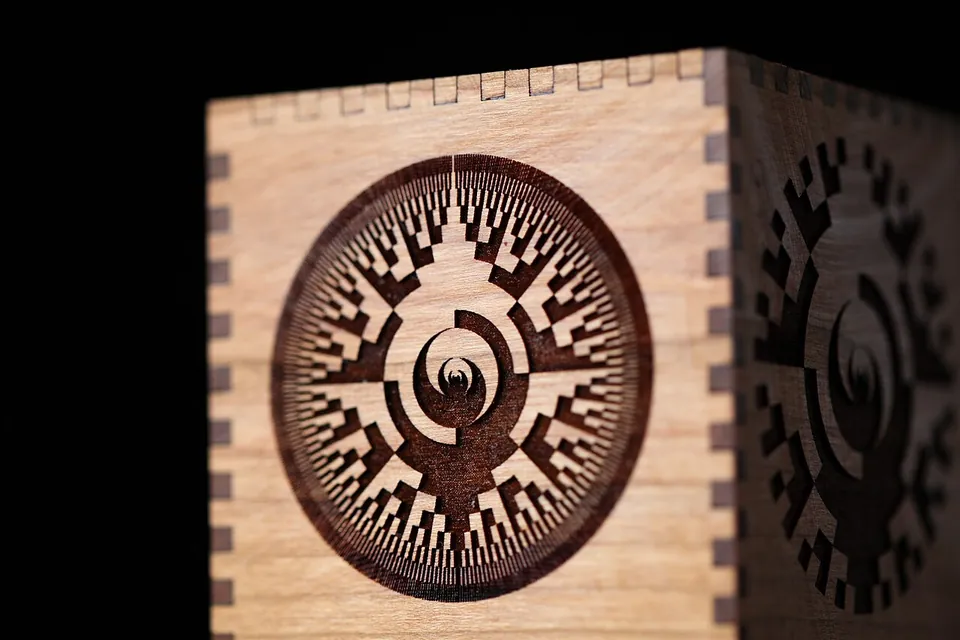
Both work, and here wattage does matter. Bambu rates the 10 W module at 5 mm maximum cutting thickness in basswood plywood on its tech-spec page (the store FAQ says 6 mm) and the 40 W module at 15 mm, with engraving speeds of 400 mm/s and 1000 mm/s. Those are respectable numbers for an accessory. A CO2 machine of similar rated power cuts comparable thicknesses, usually with a narrower, cleaner kerfThe width of material the beam actually removes. A narrow kerf means tighter-fitting parts and less loss on tight nests; a wide one eats into the cut line. and less charring, because the beam couples into the wood instead of burning its way in.

Acrylic
This is the dividing line. Dark acrylic works on a diode. Clear acrylic does not, at any wattage, unless you paint or mask the surface so the beam has something to grab. CO2 cuts clear acrylic with the polished, flame-like edge that makes acrylic worth using in the first place. xTool describes its own CO2 machine as one that "can handle all color acrylic" and its fiber machine as the metal one, which is a fair summary of the whole category.
Metal
Neither a blue diode nor CO2 engraves bare metal. Epilog, which has sold CO2 systems for decades, sells the workaround rather than the capability: "Pretreating the metal with a special marking agent will allow you to easily mark bare metals with your CO2 laser." Bambu lists "metal sheet" in its module's material list, and that works the same way, on coated, anodised or painted surfaces. Bare aluminium or brass needs a marking compound, or a fiber laserA 1064 nm near-infrared laser. Metal absorbs that wavelength, so it marks and engraves bare aluminium, brass and steel directly. It is poor at wood and does not cut acrylic cleanly, which is why it is a separate machine, not a better one. at 1064 nm, which is a third category and not something Bambu sells.
Glass and stone
CO2 frosts glass nicely and does not cut it. Diodes mark stone and slate. Neither is a glass-cutting tool.
What a CO2 machine drags along
A diode is a chip. It fits on a toolhead, which is exactly why Bambu could bolt one onto a printer. A CO2 source is a glass tube, tens of centimetres long, sitting fixed in the frame while mirrors fold the beam to the moving head. That is why the R1 cannot be an H2 accessory and has to be its own machine, and it brings three consequences a printer owner has not had to think about:
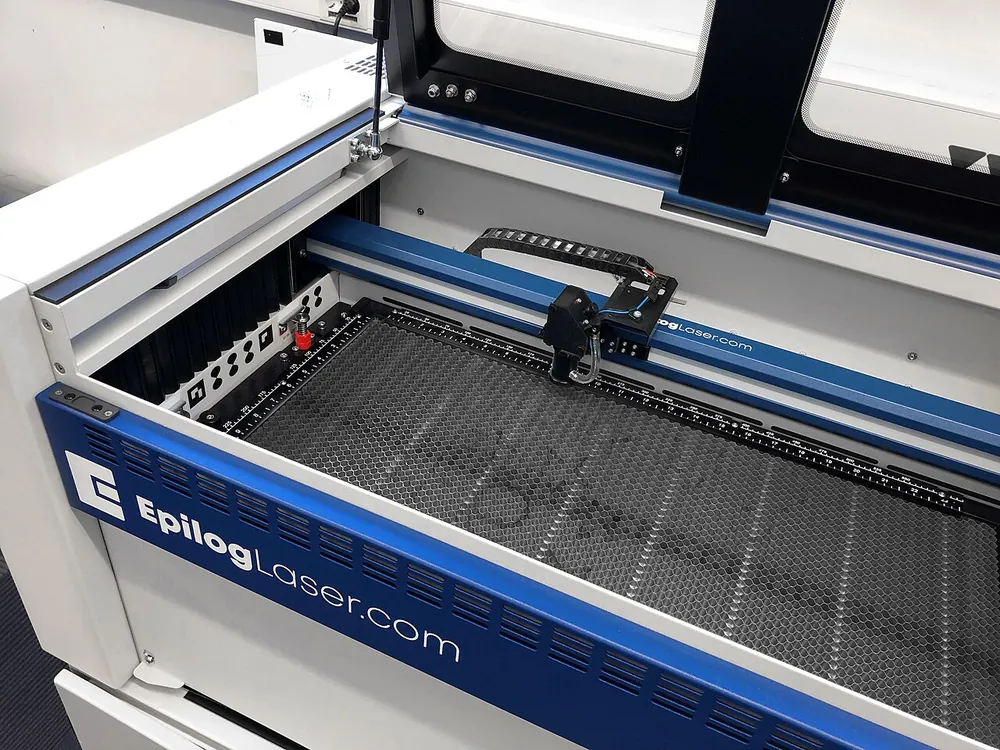

- The tube is a consumable. xTool rates the glass tube in its P2S at 6,000 to 8,000 hours, with output dropping to roughly 70 % by the end of that window, and notes that RF tubesRadio-frequency excited metal tubes. More expensive than glass tubes, longer lived, smaller spot, and they switch fast enough for fine engraving. Glass tubes are the cheaper, shorter-lived option in most consumer CO2 machines. last to about 10,000 hours. A diode module has no equivalent wear part at that scale.
- Extraction is not optional. Bambu already ships a smoke ventilation pipe and adapter with the laser kit, and desktop CO2 machines expect either a duct to a window or a filter unit that costs several hundred dollars on its own.
- Footprint. The beam path sets the machine size. The xTool P2S has a 600 × 305 mm bed in a machine you do not put on a shelf; the H2's 40 W module works in a 310 × 250 mm area inside a printer you already own.
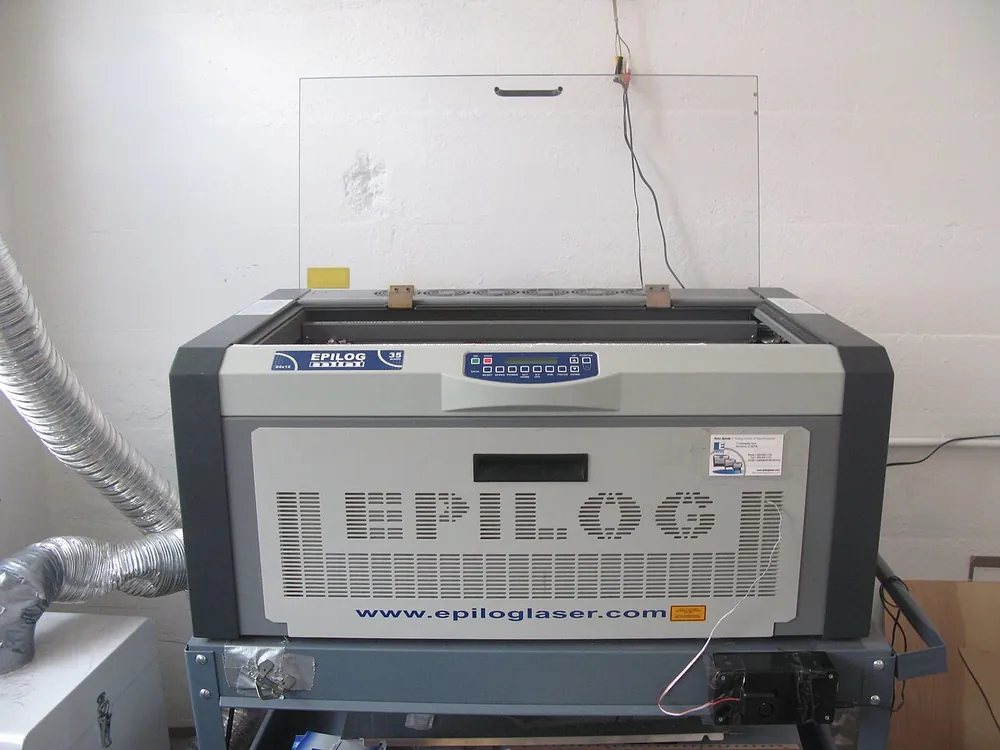

Both are Class 4 laser sources made safe by their enclosure. Bambu labels the module itself "Class 4" and the printer with the module installed "Class 1", with the footnote that this holds only "when the printer's protection is complete and properly working". Consumer CO2 machines are certified the same way. Open the lid and defeat the interlock, and either one will blind you.
What it costs today
Prices checked September 14, 2026, on the vendors' own stores:
| Option | Laser | Work area | Price |
|---|---|---|---|
| Bambu H2 laser module (10 W / 40 W) | 455 nm diode | 310 × 270 mm / 310 × 250 mm | from $638, needs an H2 Laser-version machine |
| Glowforge Plus | CO2 | desktop | $2,249 |
| Glowforge Pro | CO2 | desktop | $2,999 |
| xTool P2S | 55 W CO2, glass tube | 600 × 305 mm | $2,799 (MSRP $4,499), pre-order |
| Bambu R1 | CO2, power unannounced | unannounced | unannounced, launches Sep 22 |
Read the module price carefully: the $638 kit only fits an H2 Laser version machine. Upgrading a plain H2 needs the separate Laser Upgrade Kit. And the H2S takes only the 10 W module; the H2D and H2C take both.
That table is also the reason the R1's price is the only number worth waiting for. Bambu's pattern with the A1 and P1S was to undercut an established tier rather than match it. If the R1 lands meaningfully under the Glowforge and xTool bracket with Bambu's software polish, it changes the entry price of CO2. If it lands inside that bracket, it is a good machine in a crowded market.
So which one do you need?
Stay with the module if your work is engraving wood, leather and dark acrylic, light cutting up to a centimetre or so of plywood, and you already own an H2. It shares the frame, the enclosure and the software you know, and it costs a fraction of a machine.
Wait for the R1, or buy a CO2 machine if clear acrylic is on your list, if you cut rather than engrave, if you do runs instead of one-offs, or if you do not want your printer tied up while the laser works. Cutting speed and edge quality on a dedicated machine are not a marginal gain.
Neither if the goal is engraving bare metal. That is fiber, and no amount of CO2 wattage substitutes for it.
What we still do not know about the R1
As of September 14: no power rating, no work area, no price, no enclosure or extraction detail, no ordering or shipping information, and no photograph of the machine. Bambu's product page confirms the category and the date and nothing else, and subscribers are offered 15 % off, valid for 60 days after launch and stackable with an R1 add-on sale, which reads like accessories launch with it.
We will update this page on September 22 with the real numbers, and the comparison table above with it.
The R1 is not a bigger laser module. It is the wavelength the module never had, in a machine that has to exist because a CO2 tube cannot ride on a toolhead.
A CO2 machine earns its space if
- You cut clear acrylic, or any acrylic where the edge quality is the product
- You cut more than you engrave, and thicker than a centimetre
- You run batches and cannot have the printer occupied by laser jobs
- You have a window, a duct or the budget for a filter unit
The H2 module stays the better buy if
- Your work is engraving wood, leather, slate and dark acrylic
- Cutting means plywood up to 15 mm now and then, not production runs
- You want one machine, one enclosure, one software stack
- The $638 module is the whole budget, not the deposit on one
Wait for the price, not for the spec sheet
Everything that matters about a CO2 laser is already known before Bambu publishes a single number: it cuts what a diode cannot, it wears a tube, it needs air handling, and it is a machine rather than an accessory. The only genuinely open question on September 22 is where Bambu puts the price. Under the Glowforge and xTool bracket, with Bambu's software and camera work on top, and the entry price of desktop CO2 moves. Inside that bracket, the H2 module keeps being the sensible answer for everybody whose material list stops at wood, leather and dark acrylic.
Sources
- Bambu Lab, H2D technical specifications (laser type, 455 nm, 10 W / 40 W, cutting thickness, speeds, work area, Class 4 / Class 1): bambulab.com/en/h2d/tech-specs
- Bambu Lab US store, H2 Laser Upgrade Kit (price, material list, 10 W vs 40 W FAQ, H2S supports 10 W only, ventilation parts): us.store.bambulab.com/products/h2-laser-upgrade-kit
- Bambu Lab, R1 product page and forum announcement of September 14, 2026 (CO2 confirmed, September 22, subscriber discount): bambulab.com/en-us/r1
- xTool, P2S product page (55 W CO2, 600 × 305 mm, price, glass tube life 6,000-8,000 h, RF to 10,000 h, "can handle all color acrylic"): xtool.com
- xTool, guide on cutting clear acrylic with a diode laser ("passes through the clear acrylic, leaving it intact"): xtool.com/blogs/how-to
- Epilog Laser, metal marking with a CO2 laser (marking agent required for bare metal): epiloglaser.com
- Glowforge store, Plus and Pro pricing: shop.glowforge.com
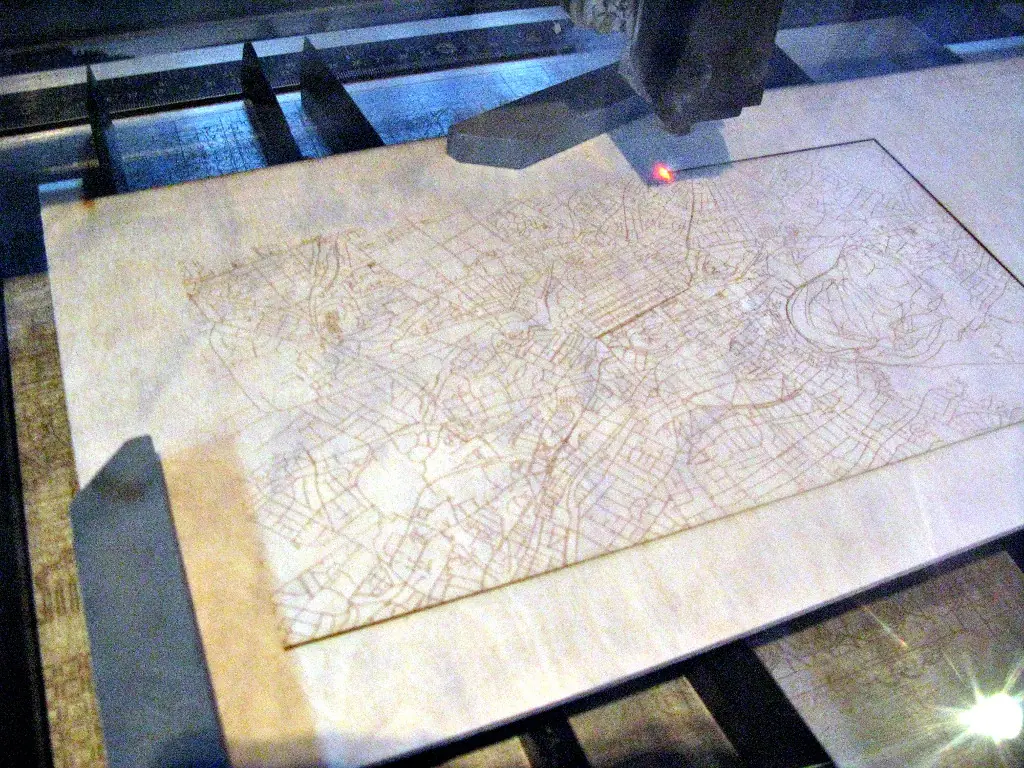
- Photographs: Wikimedia Commons, credited under each image. The two machines shown are described as CO2 by the people who photographed them; the wood and the cutting shot do not name a machine, and the captions do not claim one.