The Tools We Keep Next to Our Bambu Printers
Published · Roundup, not sponsored · Built from Bambu's own guides and owner reports, no lab tests of our own
Snapshot: Bambu wiki packing lists and procedures, Bambu US store pages and the linked Amazon listings checked October 8, 2026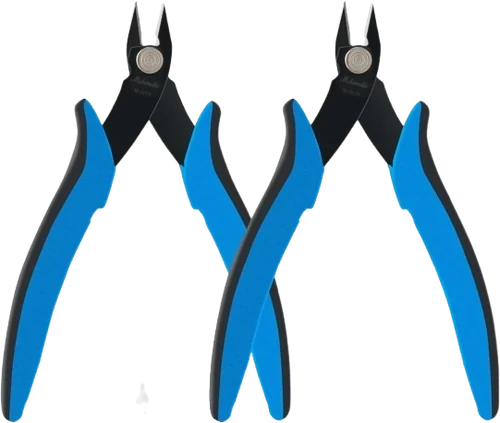
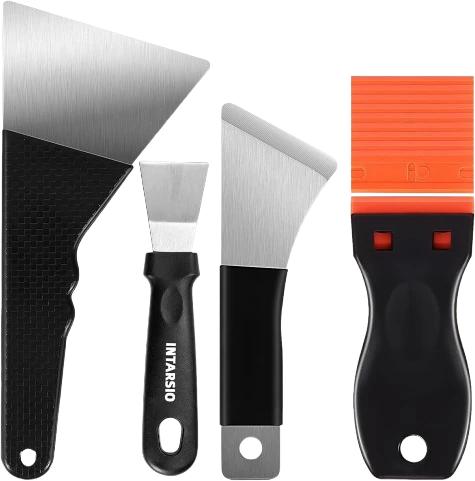
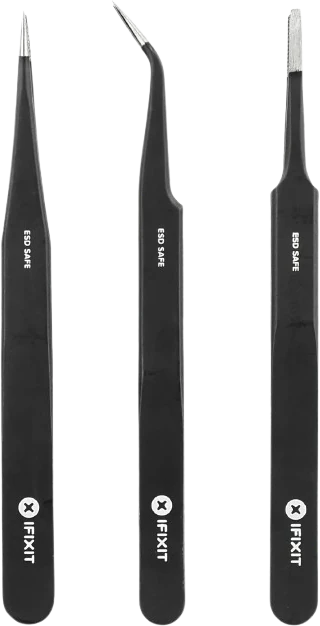

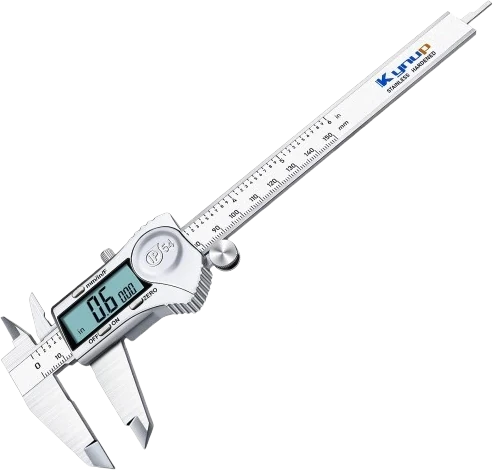
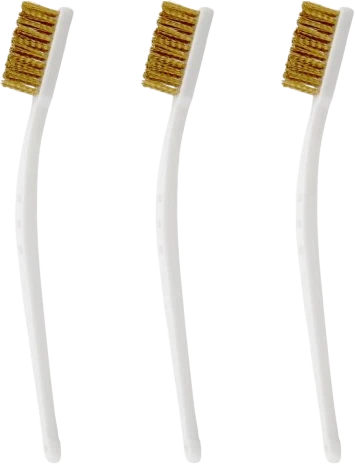
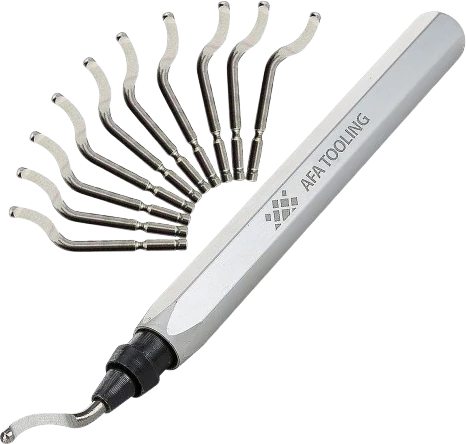
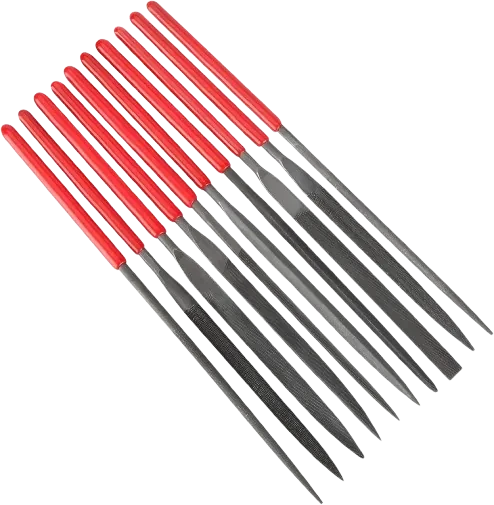
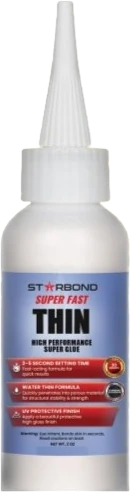
The nine tools in the order of this roundup, not to scale. Images: the manufacturers (product images); the hex key set is shown as a line drawing.
Short verdict
Every packing list we checked on Bambu's wiki, from the A1 mini to the H2C, has the same small kit: an H1.5 and an H2.0 hex key, an unclogging pin and a bare scraper blade whose grip you print yourself. On day one, add flush cutters, a scraper with a plastic blade and fine tweezers. Get a proper hex key set before your first hotend or cutter-lever job, because owners report the stock keys wearing out and damaging screws. A caliper pays off once you design parts or chase AMS feed errors, and the deburring tool, needle files and thin CA glue are for finishing. The brass brush is optional, and it is the one tool here that Bambu's own procedures never use.
Who this list is for
New owners need little. EnoTheThracian's forum list is a scraper for brims, plate cleaning supplies and "a pair of flush cutters to cut filament", then "Everything else, you do not need (yet" (Bambu forum). Tweezers are our addition to that list, because Bambu's maintenance guides use them so often.
Who can skip most of it: if you print PLA on the textured PEI plate and release parts by flexing the cooled plate, the first step in Bambu's own post-print guide, flush cutters may be all you need for months.
What owners report, tool by tool
Forum posts quoted below do not name the products we link unless we say so.
Flush cutters
Flush cutters are the first add-on most owners name; RandomKhaos uses his for "cleaning up the print, removing supports, cutting filament" (Bambu forum). Note that the "Filament Cutter" in the P2S toolbox is a spare blade for the extruder's built-in cutter, not a hand tool (P2S packing list). Olias warns of "many awful knockoffs" (Bambu forum); the pair we link is an inexpensive mshandto two-pack, not a name brand.
PTFE tube: Bambu lists scissors, nippers or a knife and asks for a perpendicular cut whose cross-section is a perfect circle (Bambu wiki), and MZip avoids "cutters that squeeze the teflon and force it out of round" (Bambu forum). If your cutters leave the tube end oval, switch to a blade.
Scraper kit
Before any blade, try the flex: lkraus says flexing the cooled plate "will usually make the parts pop off" (Bambu forum). Bambu's steel blade splits owners. On textured PEI, s.3 warns "That blade will gouge the pei" (Bambu forum), and more generally lkraus finds it "just too easy to scratch a plate with metal blades" (Bambu forum). Locoman, by contrast, has scraped his PEI plate with Bambu's blade for half a year without changing its texture (Bambu forum). In a Cool Plate thread, an X1C owner took a chunk out of his sheet (Bambu forum), while Luukmaster has no trouble at "a very shallow angle to the bed" with very little pressure (Bambu forum). Plastic razor blades get the most praise: Olias says his "glides over the build-plate with no marks or scratches", and Ks_kennedy has used them for over two years and says they "never damage the bed" (Bambu forum).
The INTARSIO kit we link has both, per the listing: a 0.2 mm plastic razor scraper and three steel scrapers. On textured PEI, use the plastic blade first and steel only when it is not enough. Rules for the other plates are under Fit and settings.
Precision tweezers
Bambu's wiki asks for tweezers again and again, from hotend blobs to PTFE connectors (see Fit and settings). JonRaymond keeps "a set of fine tweezers next to the printer" to grab ooze (Bambu forum). Bullocks uses thin stamped tweezers only for "holding/locating something"; for toolhead connectors he and Olias use sturdier repair-kit tweezers or needle-nose pliers (Bambu forum). In the iFixit set we link (iFixit), the blunt pair is the closest match to Bambu's flat tweezers.
Hex key set
Several owners report the stock keys failing. lkraus calls the included 1.5 and 2 mm wrenches "made of dried out cheese" that wear out after one or two uses and then damage screws; jonesq "almost ruined" his printer with the 1.5 (Bambu forum). Josh-3D notes that stripped screws "seem to happen a lot with the filament cutter arm" (Bambu forum).
The set we link is Wera's 950/9 Hex-Plus: nine chrome-plated L-keys from 1.5 to 10 mm, including the H2.5 that Bambu adds to the H2S Laser Full Combo (H2S packing list). Wera says the Hex-Plus profile reduces rounding out and allows up to 20 percent more torque (Wera). On hotend screws, "ALWAYS go with too little torque" (just4memike, Bambu forum).
Digital caliper
Bambu's wiki asks for a caliper on AMS feeding errors such as "filament too thin": its HMSHealth Management System: the error codes a Bambu printer shows, each with a wiki page that explains the fix. page gives the normal diameter as 1.75 mm +/- 0.03 mm (A1 HMS page). It also asks for one for elephant footA first layer squashed wider than the rest of the part, which leaves a lip along the bottom edge. compensation, which wants at least 0.01 mm resolution and warns that pressing the jaws too hard on the soft first layer gives too small a reading (Bambu wiki). RandomKhaos uses his "all the time, especially when I'm designing parts" (Bambu forum). Whether cheap calipers are accurate enough is debated (Bambu forum); Kynup gives 0.01 mm resolution and 0.02 mm accuracy for the model we link (Kynup). The Amazon title also says IP54, but Kynup's own page for this 6-inch model only says "Screen Splash Proof".
Brass brush
No Bambu wiki procedure we found uses a brass brush on the nozzle. Bambu's X1 guide cleans the hot nozzle with "tissue, cloth, or tweezers" (Bambu wiki), the P2S blob guide uses tweezers and paper towels (Bambu wiki), and a separate wiki page calls Bambu's Hotend Cleaning Sponge, used wet, "compatible with nozzles on all printer models" (Bambu wiki); the H2C ships with one (H2C packing list). Plenty of owners brush anyway. Bullocks uses a brass brush on the hot nozzle "every now and then" (Bambu forum), and MalcTheOracle's rules are "Take the sock off first", "Warm, not hot" and "Think toothbrush rather than saw" (Bambu forum).
The risks are real. An H2D owner brushing nozzles with the printer on saw a spark and a restart; the first reply suspects a short across the bare heater wires (Bambu forum). A P2S owner knocked off a small rubber piece while wire brushing; another owner explains that it keeps the wires safe from the heating assembly (Bambu forum). Never use a brush harder than the nozzle (How-To Geek). The YiwerDer set we link has copper-brass heads but is sold for rust and welding slag, not for 3D printers.
Before you put anything metal near a hot nozzle
Bambu's P2S blob guide says to turn off the printer and disconnect power before any work on the toolhead's electronics, and to wear heat-resistant gloves if you must work while the hotend is hot (Bambu wiki). With a brush, pull the silicone sock first, work at the nozzle tip only, and keep the bristles away from the heater and thermistor wires.
Deburring tool
The forum's standard answer to brim edges: "For the brim, get a deburring tool" (SimEyeSee, Bambu forum). Bullocks recommends one because it is "really hard to cut yourself" (Bambu forum), and 3DPrintBeginner also uses one on holes and elephant foot (3DPrintBeginner). The swivel blade has quirks: SimEyeSee notes that "one side of the blade will cut too much, while the other side cuts it just right" (same post), and Wsquared58 has gouged edges because the blade rotated in the handle (Bambu forum), so try both directions on a scrap edge first. Bambu's own finishing guide does not mention deburring tools. AFA sells the tool with 11 high-speed steel blades in total (AFA Tooling).
Needle files
Files have the thinnest forum record of the nine; lkraus lists "small files" for support removal (Bambu forum). Bambu's guide to splitting large models says to "lightly sand the pegs or holes using a file or sandpaper (start with 220 grit)" when the connectors do not fit (Bambu wiki). Sandpaper covers much of the same ground, so files are a nice-to-have unless you assemble printed parts often.
Thin CA glue
Bambu's wiki says "For PLA, super glue is an ideal choice. For PETG or ABS, use a two-part epoxy" (Bambu wiki). Its finishing guide allows ordinary super glue on PLA and PETG when the joint does not need much strength, but warns that it "will crack and lose bond strength in cold environments or after long-term use" (Bambu wiki). Where CACyanoacrylate, the chemical name for super glue. fails on PLA, Eponymous explains that it "is cured by moisture and PLA is very dry", so use accelerator or a mist of water (Bambu forum). Bambu's A1 maintenance guide even uses instant glue to reattach a loose footpad (Bambu wiki). Starbond's Super Fast Thin, with a viscosity of 2 to 5 cPs, wicks into tight seams but is wrong for gaps; Starbond lists PLA, ABS, PETG and polycarbonate prints as compatible, and its 30-month shelf-life warranty applies to glue stored below 40 °F, which in practice means the fridge (Starbond). For PETG and ABS parts under load, Bambu's epoxy advice is the safer bet.
Fit and settings on Bambu printers
None of the nine depends on printer model, plate size or AMS. Where Bambu's own guides use them:
| Tool | Where Bambu's wiki uses it |
|---|---|
| H1.5 / H2.0 hex keys | Hotend swap on the P1 series and X1 series (H2.0), belt re-tension on the A1 (H2), P2S extruder cleaning (both), A1 mini blob cleanup |
| Flat tweezers | Blob cleanup on the P2S, A1 mini and H2D; P2S extruder cleaning; A1 rails and purge wiper; A1 mini PTFE connectors; X2D lead screws |
| Caliper | Filament diameter on AMS HMS errors, elephant foot compensation, max volumetric speed test; not needed for flow rate calibration |
| Scraper | After cooling and flexing; sharp scraper on the Cool Plate and for TPU on the Engineering Plate; SuperTack, slightly softer than Textured PEI and easier to scratch: alcohol first, then gently lift the print with the included scraper; Smooth PEI: glue with every filament except PLA "to prevent the PEI sheet from tearing"; Textured PEI: no scraping rule found |
| Cutters or pliers | 45 degree filament cut for the X1 external spool, residual filament after an X1 hotend swap (pliers or scissors), PTFE tube (nippers allowed, cut must stay round) |
| Heat-resistant gloves | Blob and nozzle work on the P2S, A1 mini and X1 series (not one of the nine; see our accessories page) |
The X2D also ships an open-end wrench for its auxiliary extruder and hotend that no L-key set replaces (X2D packing list).
Alternatives
Bambu's own tools cover most of these categories (plain store links, no commission):
- Print Finishing Kit: a Mag-Alloy Scraper, a 4-piece needle file set, a deburring kit and a flush cutter.
- Maker's Supply ESD tweezers; Bambu says to keep them off hard alloys and fiberglass.
- Maker's Supply Screwdriver Kit with H1.5 and H2.0 bits, for owners who prefer drivers to L-keys.
- Professional Trimming Tool Kit, a deburring handle with several blade types.
- Nozzle Cleaning Sponge, Bambu's answer to the brass brush.
Mprints finds Bambu's tools "a bit expensive" (Bambu forum), and MalcTheOracle thinks "the ifixit sets are better value" (Bambu forum).
Common questions
What tools come with a Bambu Lab printer?
Every packing list we checked on Bambu's wiki (A1 mini, A1, P1S, X1C, P2S, X2D, H2D, H2S and H2C) includes an H1.5 and an H2.0 hex key, an unclogging pin and a scraper blade whose grip you print yourself. Flush cutters, tweezers, a caliper, files and glue are not included.
Will a metal scraper damage a Bambu textured PEI plate?
It can, according to some owners in the Bambu forum: one warns that Bambu's metal blade will gouge textured PEI, though another has scraped his PEI plate with it for half a year without changing its texture. A plastic razor blade is the low-risk choice, and flexing the cooled plate often releases parts without any tool.
What size hex keys do Bambu printers use?
H1.5 and H2.0 cover most owner maintenance in Bambu's wiki. The H2S Laser Full Combo adds an H2.5 key, and the X2D adds an open-end wrench for its auxiliary extruder and hotend.
Should I clean a Bambu nozzle with a brass brush?
Bambu's own guides do not use one. They clean the hot nozzle with tissue, cloth or tweezers, use paper towels for blobs, or use Bambu's wet Hotend Cleaning Sponge. One owner who brushes takes the silicone sock off first, works warm rather than hot and brushes lightly; keep the bristles off the heater wires.
Is super glue strong enough for PLA and PETG prints?
For PLA, Bambu's wiki calls super glue an ideal choice. For PETG or ABS it recommends two-part epoxy, and it warns that super glue cracks and loses strength in the cold and over time.
Related: Accessories we recommend · Build plates for Bambu printers · Clogged nozzle fixes · Your first week with a Bambu printer · Troubleshooting
Sources. Packing lists, Bambu Lab Wiki: A1 mini, A1, P1S, X1C, P2S, X2D, H2D, H2S, H2C. Procedures, Bambu Lab Wiki: A1 basic maintenance, X1 basic maintenance, P1 hotend, X1 hotend replacement, P2S hotend blob, A1 mini hotend blob, H2D hotend blob, P2S extruder cleaning, A1 mini PTFE tube, X2D periodic maintenance, HMS 1200-1200-0001-0001, elephant foot compensation, calibration, flow rate calibration, print finishing, build plates, Cool Plate SuperTack, Cool Plate, Engineering Plate, splitting large files, X1 loading filament, PTFE tube, Hotend Cleaning Sponge (all checked October 8, 2026). Bambu Lab US store: Print Finishing Kit, ESD tweezers, Screwdriver Kit, Trimming Tool Kit, Nozzle Cleaning Sponge. Bambu Lab Community Forum, posts quoted above (linked at each quote; usernames as shown in the forum). Publications: How-To Geek, Tim Brookes; 3DPrintBeginner (2021). Manufacturers: Wera 950/9 Hex-Plus 1, iFixit Precision Tweezers Set, Kynup 6-inch caliper, Starbond Super Fast Thin, AFA Tooling deburring tool; INTARSIO, mshandto, YiwerDer, Libraton and the Kynup title: the Amazon US listings linked above (checked October 8, 2026). We have not run tests or measurements of our own for this page.