Bambu H-Series vs Prusa's 400°C HT Hotend: Who Needs the Extra Heat?
Short version
Prusa now sells a 400°C HT Hotend for its CORE One printers, $199.99 in its US store. No current Bambu printer goes past 350°C, the limit of the H2S, H2D, H2C and H2D Pro. For PPS and PPA, the high-temperature filaments Prusa launched with the hotend, that gap does not matter: their makers ask for 310 to 350°C and 280 to 320°C. What limits both brands is the chamber, and Prusa itself says its 60°C chamber is too cool for PEEK, PEKK and PEI.
- Prusa HT Hotend, highest nozzle temperature
- 400°C
- Bambu H-series, highest nozzle temperature
- 350°C
- Top of the range Prusa gives for its new PPS filaments
- 350°C
What Prusa launched
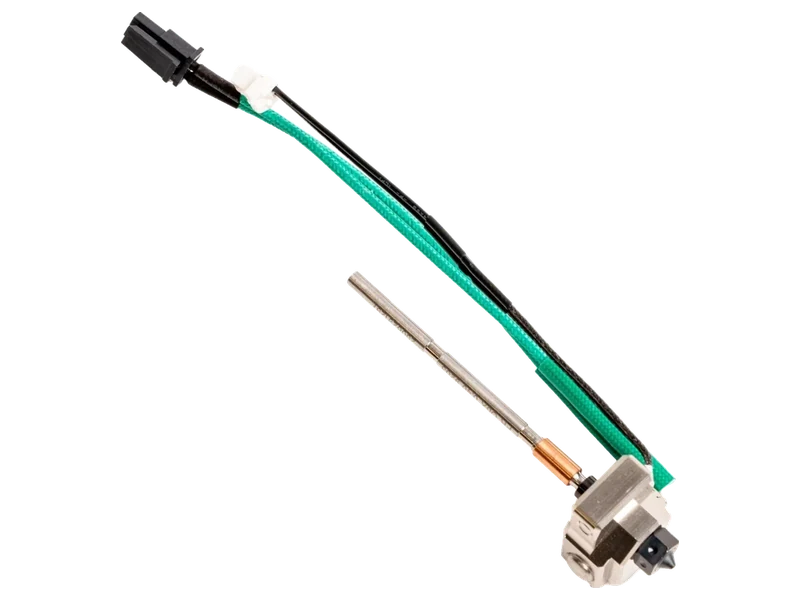
Prusa released the HT Hotend on October 21. It is a quick-swap hotend for the CORE One family that heats to 400°C, against 290°C for the stock hotend. It fits the CORE One, CORE One+, CORE One L and CORE One L+, but not printers with the INDX toolchanger. In Prusa's US store it costs $199.99, with a lead time of about three weeks when we checked. The CORE One L+ also comes with it pre-installed for $2,169, $170 more than without.
The box holds the hotend with a hardened 0.4 mm ObXidian nozzle (not a high-flow one), two new idlers, one of them for high-temperature filament, a new main plate printed in PC Blend Carbon Fiber, gloves and a printed guide. Prusa launched it together with a HighTemp print sheet and three high-temperature filaments in its shop: Polymaker Fiberon PPS-CF10 and PPS-GF20, and Siraya Tech Fibreheart PPA-CF Core.
Prusa's own measurements show what the extra heat does for filaments it already sells. It gives the print temperature only for PC Blend Carbon Fiber: 350°C.
| Prusament filament | Interlayer adhesion with the HT Hotend |
|---|---|
| PA11 Carbon Fiber | +23% |
| ASA | +18% |
| PC Blend | +7% |
| PC Blend Carbon Fiber | +7%, printed at 350°C |
- Source: Prusa's figures against its stock hotend, from the product page and the announcement; we have not tested this.
How hot each printer gets
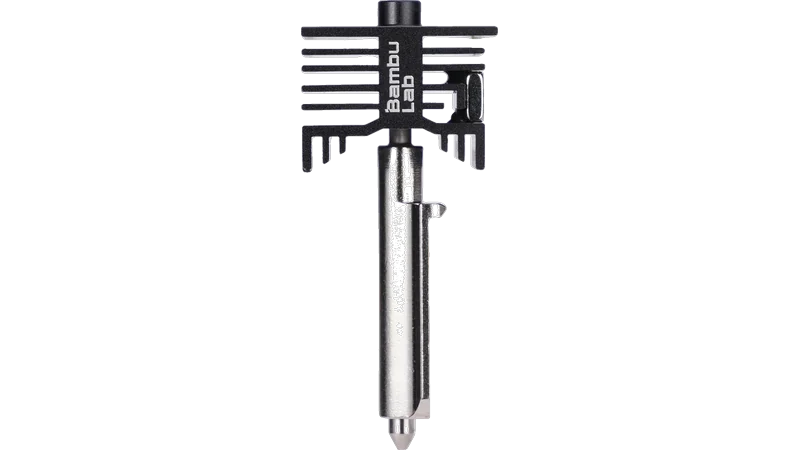
Bambu's spec pages stop at 350°C for the H2S, H2D, H2C and H2D Pro, at 320°C for the X1E, which Bambu discontinued in March 2026, and at 300°C for the X2D, P2S and the rest of the lineup. The chamber is a separate question: the H-series and the X2D heat it to 65°C, while the P2S has a passive chamber that only warms up from the bed.
| Printer | Nozzle, highest | Chamber, highest | US price |
|---|---|---|---|
| Bambu H2S | 350°C | Active, 65°C | $1,199 |
| Bambu H2D (two nozzles) | 350°C | Active, 65°C | $1,549 |
| Bambu X2D | 300°C | Active, 65°C | $649 |
| Prusa CORE One+ (Gen 2) | 290°C, 400°C with the HT Hotend | 55°C | $1,299 (kit $999), plus $199.99 for the HT Hotend |
| Prusa CORE One L+ (HighTemp Hotend) | 400°C | 60°C | $2,169 |
- Temperatures: the makers' spec pages. Prusa calls the CORE One+ chamber active on its product page and passive in the comparison on the CORE One L+ page.
- US price: Bambu US store, checked October 21, 2026, a struck-through figure is Bambu's typical price; Prusa's US store, checked October 26, 2026.
What the filaments ask for
PPS (polyphenylene sulfide) and PPA (polyphthalamide) are the step above carbon-fiber nylon. Bambu rates its PPS-CF at 264°C and its PPA-CF at 227°C heat deflection (at 0.45 MPa), against 186°C for its PA6-CF. Here is what each maker asks for, and which printers get there:
| Filament | Nozzle, maker's range | Chamber, maker's range | Bambu H-series | CORE One with HT Hotend |
|---|---|---|---|---|
| Bambu PPA-CF | 280 to 310°C | 50 to 80°C | Yes, like every enclosed Bambu, per Bambu's wiki | Within both ranges |
| Siraya Tech PPA-CF Core (Prusa shop) | 280 to 320°C | Not stated | Within the nozzle range | Yes, Prusa profile |
| Bambu PPS-CF | 310 to 340°C | 60 to 90°C | Yes; Bambu lists only the X1E, H2D, H2S and H2C | Nozzle yes; the L+ chamber (60°C) sits at the bottom of the range, the CORE One+ (55°C) below it |
| Fiberon PPS-CF10 and PPS-GF20 (Prusa shop) | 310 to 350°C | Not stated | Reaches the top of the nozzle range | Yes, Prusa profile; Prusa says the HT Hotend is required |
| PEEK, PEKK, PEI | 400°C is “on the lower end” (Prusa) | Hotter than 60°C (Prusa) | No | Not supported, says Prusa |
- Ranges: Bambu's data sheets and Prusa's shop pages, read October 24, 2026. Prusa's filament pages give no chamber temperature.
Two things stand out. None of these PPS and PPA filaments asks for more than 350°C, so the extra 50°C of the HT Hotend is headroom, not a requirement. And the CORE One needs the HT Hotend for PPS at all, because its stock hotend stops at 290°C. On the Bambu side, PPS takes an H-series printer, while Bambu's own PPA-CF also runs on enclosed 300°C printers such as the X2D and P2S, according to Bambu's wiki.
The chamber is the limit
Both makers tie good results to the air around the part, not only to the nozzle. Bambu printed the test samples in its PPS-CF data sheet on an X1E at 320°C with a 60°C chamber, and notes that 335°C and 90°C would give higher values, “especially the Z-direction's”, the strength between layers. None of the desktop printers in this comparison reaches 90°C: the H-series holds 65°C, the CORE One L+ 60°C, the CORE One+ 55°C. Prusa's own machine with a 90°C chamber is the Pro HT90.
The same limit is why Prusa does not support PEEK, PEKK or PEI on the HT Hotend. Its FAQ says 400°C and a 120°C bed would be “on the lower end but sufficient”, but a 60°C chamber is too low. Prusa's own pages are not consistent here: the product summary promises PEKK-CF and PPSU, the announcement says small PEKK-A CF parts are possible. We go by the FAQ, the most specific of the three.
Our take
400°C is headroom, not the entry ticket
For PPS and PPA, a Bambu H-series printer already reaches the nozzle temperatures both makers recommend, with a chamber 5°C warmer than the CORE One L+. The HT Hotend matters if you already own a CORE One: for $199.99 it opens PPS, which on the Bambu side takes an H-series printer. The last 50°C only pays off for materials that also need a much hotter chamber than any of these printers has.
What else you need
- A hardened nozzle. Bambu makes a hardened steel nozzle mandatory for its PPA-CF and advises against stainless steel for PPS-CF. Prusa ships the HT Hotend with a hardened ObXidian nozzle and warns that these materials damage brass.
- No AMS. Bambu marks every AMS unit as not compatible with its PPS-CF and PPA-CF. Its wiki suggests keeping the dried spool sealed in an AMS HT and feeding the filament through the TPU port on the back of the H2D or H2S.
- Dry filament. Both makers tell you to dry these filaments before printing and keep them sealed while printing; Prusa sells its USS Drybox for this.
- Filtration. Prusa strongly recommends filtration because most high-temperature materials emit dangerous fumes. Bambu asks for a well-ventilated room or an air filtration or exhaust system.
Who should care
- You own an H2S, H2D or H2C. For PPS and PPA you already have the nozzle temperature and the warmer chamber. The extra heat of the HT Hotend only matters for PEEK-class materials, and those need a hotter chamber than either brand's desktop printers offer.
- You own a CORE One. The HT Hotend gets you into PPS for $199.99, without a new printer. Prusa itself warns that large PPS models may warp, so the cooler CORE One+ chamber (55°C) limits you more than the L+.
- You are buying a printer for PPS. On the Bambu side that means an H-series printer such as the H2S ($1,199). On the Prusa side, a CORE One+ ($1,299, or $999 as a kit) plus the HT Hotend, or the CORE One L+ with the HT Hotend pre-installed for $2,169.
- You need PEEK or PEKK. Neither brand's desktop printers are the right tool. Prusa itself points to the chamber; its Pro HT90 heats the chamber to 90°C.
Common questions
Can a Bambu printer print PPS-CF?
Yes, but according to Bambu's wiki only the X1E, H2D, H2S and H2C. Bambu's data sheet asks for a 310 to 340°C nozzle and a 60 to 90°C chamber; the H-series reaches 350°C and 65°C, the discontinued X1E 320°C and 60°C. The filament cannot run through an AMS.
Can Prusa's HT Hotend print PEEK or PEKK?
Prusa says it is not supported: 400°C and a 120°C bed would be enough, but the 60°C chamber of the CORE One L+ is too cool for PEEK, PEKK and PEI. Prusa's announcement still allows small PEKK-A CF parts.
Do Prusa's new PPS and PPA filaments need the HT Hotend?
For PPS, yes: Prusa lists 310 to 350°C for Fiberon PPS-CF10 and PPS-GF20, above the 290°C of the stock hotend. Siraya Tech PPA-CF Core (280 to 320°C) may print small parts with the stock hotend, Prusa says, but it recommends the HT Hotend for a strong bond between layers.
Sources
- Prusa Research, “400°C HT Hotend is out!” (October 21, 2026)
- Prusa, HT Hotend Upgrade product page: US price, technical parameters, box contents, FAQ, product photo (read October 24, 2026)
- Prusa product pages CORE One+ (Gen 2), CORE One+ (Gen 2) kit, CORE One L+ and CORE One L+ (HighTemp Hotend): US prices and specs (read October 24, 2026)
- Prusa shop pages Polymaker Fiberon PPS-CF10, Polymaker Fiberon PPS-GF20 and Siraya Tech Fibreheart PPA-CF Core: technical parameters (read October 24, 2026)
- Prusa Research, Black Friday 2026: Pro HT90 chamber up to 90°C (October 22, 2026)
- Bambu Lab, PPS-CF technical data sheet V1.0 and store page (read October 24, 2026)
- Bambu Lab, PPA-CF technical data sheet and store page (read October 24, 2026)
- Bambu Lab wiki, printing tips for PET-CF, PPS-CF, PPA-CF and PA6-CF: printer compatibility, heat deflection, AMS HT (read October 24, 2026)
- Bambu nozzle and chamber limits: our printer pages for the H2S, H2D and X2D, from Bambu's spec pages (checked October 7, 2026)
- Title
- Bambu H-Series vs Prusa's 400°C HT Hotend: Who Needs the Extra Heat?
- Section
- News
- Published
- Prices checked
- October 21, 2026
- Sources
- Listed under the article
- Page
- Status
- Not affiliated with Bambu Lab or Prusa Research